Growth can be lonely. You notice subtle distance, fading patterns, quiet resistance. And you wonder: Am I changing too much? Am I leaving people behind?
It doesn’t announce itself. It doesn’t come with applause. It starts internally, a decision you make with yourself, for yourself. A moment where something inside you shifts and you realize: I can’t keep being who I was.
That decision is powerful… but also heavy.
Once you decide to evolve, things start changing around you, too. Not loudly. Not dramatically. Just slowly. People begin to fall away. Conversations change. Connections feel different. Energy shifts. The spaces you once fit into no longer feel like home.
And that part hurts.
No one really prepares you for the grief of outgrowing people who are still alive. For the sadness of realizing that not everyone is meant to walk the next version of your journey with you. Some people were meant for survival seasons. Some for learning seasons. Some for healing seasons. But not all of them are meant for your becoming.
And that’s hard to accept.
Growth can be lonely. You notice subtle distance, fading patterns, quiet resistance. And you wonder: Am I changing too much? Am I leaving people behind?
The truth: evolution isn’t about abandoning people. It’s about alignment. Not everyone wants to grow, and you can’t dim your light to make others comfortable.
So yes, people may slowly drift from your life. But that’s not all lost; it’s space for what truly matters. For relationships and energy that match who you are now, not who you were.
In that quiet shedding, there is clarity, honesty, and freedom. Painful, definitely; but necessary. Evolution doesn’t ask for comfort. It asks for truth. And choosing growth is choosing yourself.
It was uncomfortable to admit, but necessary. Because help given from depletion creates resentment. Support given from imbalance creates emotional debt. And care given without reciprocity slowly turns into self-abandonment
Some pain is loud and obvious. Other pain is quiet. It lives in small moments, repeated patterns, and silent realisations. The kind that doesn’t come from betrayal or conflict, but from noticing imbalance.
It comes from always being the one who shows up. From always being the one who checks in. From always being the one who adjusts. From always being the one who understands. From always being the one who gives.
And slowly realising that the same energy is not returned.
She was that person. Reliable. Present. Emotionally available. The one people leaned on. The one people called. The one people expected to be there. Not because she was closest, but because she was consistent.
Over time, she began to notice the pattern. Being the one who always initiates. Being the one who keeps relationships alive. Being the one who maintains the connection. Being the one who carries emotional labour. And a quiet question formed: why do I go so far for people who barely meet me halfway?
It wasn’t loud rejection. It wasn’t direct abandonment. It was something more subtle, the feeling of being replaceable. Not unwanted. Not disliked. Just easily substituted. The kind of feeling that builds slowly through repeated experiences of emotional imbalance.
What she didn’t understand at first was that the issue was never her heart. It was her placement. She was offering depth to people who lived on the surface. Consistency for people who live in convenience. Loyalty to people who are attached casually. Emotional safety for people who didn’t know how to protect it.
Because she was always there, her presence became expected. Her effort became normal. Her support became assumed. Her loyalty became invisible. Not because it had no value, but because it had no boundaries.
Somewhere along the way, she had learned that connection comes from effort, from being useful, from being needed, from being strong, from being supportive, and from being accommodating. So giving became a way to secure closeness, not a response to healthy reciprocity.
The shift didn’t come from anger. It came from awareness.
She began to notice something else, too, an inner conflict. The feeling of having to force herself to show up. The hesitation before helping. The pause before assisting. The quiet question of whether her giving was still genuine or was becoming anobligation.
She had often found herself holding on too long, hoping things would change, waiting for the wheels to keep turning, even when she felt like she was running on empty. There had been a quiet, dangerous voice in her head that whispered maybe she deserved the way she was being treated, maybe being undervalued was just how things were for her. But deep down, she knew that wasn’t the trut it was a habit of the mind, a shadow from past hurts trying to make sense of the pain. She reminded herself that no one ever deserved mistreatment, and that choosing to honour her worth was not selfish; it was survival, courage, and a refusal to let someone else define her value.
She started rethinking her help. Not from bitterness, but from honesty. Asking herself hard questions: Would this person be there for me if I needed them? Is this support mutual or one-sided? Am I helping from love, or am I hoping for future return? Am I giving freely, or am I investing emotionally in people who may never invest back?
It was uncomfortable to admit, but necessary. Because help given from depletion creates resentment. Support given from imbalance creates emotional debt. And care given without reciprocity slowly turns into self-abandonment.
She stopped giving automatically. She started giving consciously.
She stopped forcing generosity. She started choosing it.
She stopped helping as a reflex. She started helping as a decision.
She stopped chasing closeness. She stopped proving her value. She started observing effort instead of words. She started matching energy instead of exceeding it. Not to punish anyone. Not to harden herself. But to protect herself.
Slowly, something changed. She realised she wasn’t replaceable; she was misplaced. She had been pouring herself into spaces that couldn’t hold her depth.
When she started choosing environments that could, the feeling of invisibility began to fade. Not because she became louder, but because she became more selective. Not because she gave more, but because she gave wisely.
She didn’t need to love less. She needed to love smarter. She didn’t need to shrink. She needed to redirect her energy. She didn’t need to harden. She needed discernment.
It was a home that felt more like a cage, stripping away her chance to simply be the child she longed, to be the child she deserved to be. Yet, even in the midst of that chaos, she was blessed to find remarkable people who offered her a different kind of home. They gave her a listening ear, a safe place to breathe, and the time and space to grow into the person she was destined to become. Today, some of her most treasured memories are rooted in the kindness of those souls.
Once she closes the door to her home, she leaves the chaos of the outside world behind. Inside, she is free to let her mind wander, embrace peace, and find her calm no matter what the day has brought.
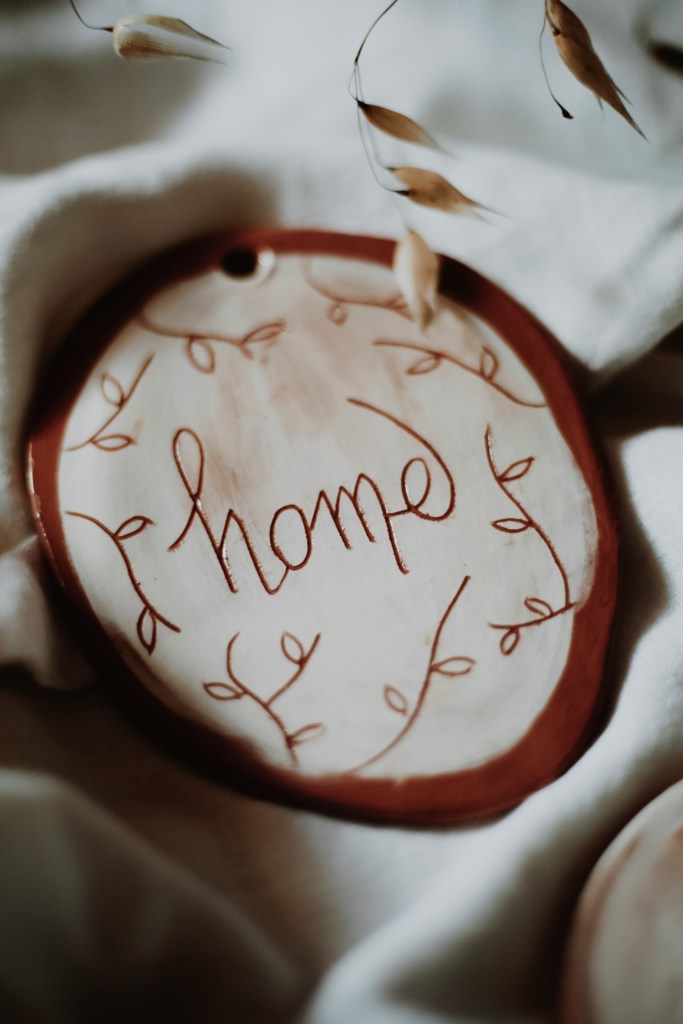
Her home is not always four walls and a roof. Sometimes, it is the quiet corner in her mind where peace finds her, even when the world around her is loud with chaos. It is the inner sanctuary she retreats to when life feels overwhelming.Her home can be the small circle of friends she trusts enough to listen without judgment when she needs to pour her heart out. It can be the quiet place she runs to when the storms of life grow too wild. It is wherever she feels safe enough to drop her guard, let go of the day’s weight, and simply be herself.
When she is in her home whether it is within her own heart, in the company of trusted souls, or in a place that soothes her spirit she knows the opinions and noise of the world cannot touch her. That is the freedom that allows her to take risks, to live authentically, and to face each day knowing that, no matter what happens, she will always have a place where she is at peace.e.
Now, this had not always been the case for her. In her past life, it was quite the opposite. She had four walls and a roof, and, to top it off, a plate of food to keep her stomach full. But that was where the comfort ended. To cope, she did what any logical teenager in that position might do take whatever she could, whenever she had the chance.There were countless times she would run to a friend’s house, just to escape the hate and resentment that filled the structure she called “home.” A home overflowing with insults. A home steeped in disrespect. A home where she was burdened with endless chores while others spent their days shopping, getting their hair done, or making money illegally in the so called land of opportunity.
It was a home that felt more like a cage, stripping away her chance to simply be the child she longed, to be the child she deserved to be. Yet, even in the midst of that chaos, she was blessed to find remarkable people who offered her a different kind of home. They gave her a listening ear, a safe place to breathe, and the time and space to grow into the person she was destined to become. Today, some of her most treasured memories are rooted in the kindness of those souls.
In those years, God’s hand was evident, sharpening her mind and inclining her toward academic excellence. She rose above her peers in school, her achievements shining brightly even when her self-worth felt dim. Still, deep inside, she longed to belong to be part of the “cool kids” crew. But she was never quite what that world demanded: not pretty enough, not wealthy enough, not light-skinned enough.
Rejection didn’t just wait for her at home it followed her like an unshakable shadow on sunny days, and like a lone star lingering in the cold darkness of winter nights. It was ever-present, a constant reminder that acceptance, for her, would never come easily. And even now, she notices its patterns woven into her everyday life appearing when she dares to stand up for what she believes, or perhaps when she tries too hard to win the approval of people who, in truth, are already impressed by her in ways she doesn’t even realize.
The question is now that she has the emotional, physical, and spiritual awareness, along with a few resources that would have been invaluable back then when she needed them most what is holding her back from using what she has now to take bold risks, make the right moves, and carve a path toward a future without limits? A future where she leaves a legacy, where her story is told on platforms that inspire others.
Could it be that, back then, she knew deep down she had nothing to lose and no one to disappoint, which gave her the freedom to act fearlessly? And now, with self-awareness and the weight of adulthood, that raw courage has been replaced by a quiet, persistent fear?
She takes pride in the twenty years it has taken to build the small sanctuary she now calls home complete with the four walls and roof she has, in many ways, built with her own hands. It may not be much by the world’s standards, but to her, it is a testament to resilience, gratitude, and hard-earned achievement. And one of the truest ways she can honor that journey is by throwing herself wholeheartedly into whatever she sets her mind to.
There comes a time when you begin to feel the weight of being unseen in a space that no longer serves your growth. It’s hard almost impossible to thrive in an environment that hasn’t been feeding what your body, mind, and spirit truly crave. When you’re constantly surrounded by the same people, same expectations, and same assumptions, it’s as though you’re trapped in a version of yourself that no longer fits. You try to stretch, to reach, to evolve but the world around you insists on seeing the old you. And in doing so, it quietly denies you the room to explore new possibilities, to walk unfamiliar paths, or to become more than what you’ve been. Sometimes, growth requires distance. Not because you hate where you came from, but because you finally love yourself enough to seek what you deserve.
Google defines friendship as people who like each other and enjoy each other’s company. Well, we all know friendship is much more than that.
Friendship is a mutual feeling between two individuals who happen to cross paths on this short, unpredictable, God-given journey to share disappointments with, laughs at the dissatisfaction that they wish could be satisfied at the snap of their fingers, to make memories and look back at their stupidity, ten, twenty years to come, to be each other’s soft pillow to land once hit by the world’s cruelty, to be each other’s confidant, listen to each other without judgment on failures and wrong decisions made intentionally or unintentionally.
But the harsh reality is… It takes a Hella long time to get that true friend who has your best interest at heart. Who won’t secretly knock you down as you work your way through the struggles, Who will act stupid with you and have to retrieve the reputation when kingdom home together.
They say that a stranger can be a more loyal friend than the friend you’ve always thought you had since birth. The advice I once received from a girl I once knew, “live your life as though you have No one in this world.” which translates to self-reliance above all.
Celebrating a friend’s next rite of passage. cc Jackie
Consulting friends before making decisions can lead to the results which benefit them through you. We always have answers of the problem at hand at the first thought of it and consulting friends is only a way to justify the decision that our very able instincts have already chosen. This will guarantee complete satisfaction in the decisions that were not influenced by peers and complete disappointments on oneself on the wrong decisions made solely. With time given, frazzled out friendships leave us with dilapidated situations that were enabled by our “consultants.”
Good days bring joyous moments while rocky days leave us out in the rainstorms. Bench-marking is measured by the thickness of our wallets once that promotion has fattened it, once you become everyone’s free ride, when you are polished enough to be an accessory or when you pick tab at the bar.
Loneliness sets in without a knock on the door expecting accommodation in your space once you lose that job, Once HE leaves, when the car is repossessed, During your grieving period when illness strikes.
Today’s society is contaminated by this ideology that one must have a #BFF, so one can upload photographs on the gram #friendshipgoals or better yet #squad. These being the groups of ladies who you run around with, in and out of bars, road trips, who you take to upcountry to show off with as your “accomplishments” to onlooking villagers that will forget you immediately you loud music Subarus vacate your dilapidated mud houses you let your parent live in as you shout from uptown bars that u only do fine whiskeys.
Once I can’t afford that tab, when I can’t afford to hop in men’s cars with you for a ‘road trip’ or ‘adventure’, once am no longer able to dress like a slut to gain mens’ attention in clubs, will I still be a member of your #squad?
The argument is that when one skips this stage, they are bound to come back for it at an older age. But resonate with what is realistic and bringing you closer to your goals and purpose in life.
Life is a journey.. we all need a shoulder to lean on, and keep us sane in our moments of insanity, someone to show a genuine interest in what’s going on in your life, what you have to say, and how you think and feel. Accept you for who you are, listen to you attentively without judging you, telling you how to think or feel, or trying to change the subject. Feel comfortable sharing things about themselves with you
Friendship evaluation 101
We are not throwing friendships off the cliff just yet, we have to recognize which friendships are worth salvaging or halting. Genuine friendships are True friendships respect values, struggles, goals, and interests.
Do they Swing the conversations to concentrate only on themselves
Dot they only see you vent about their frustrations?
Do they constantly put you down by harshly criticizing you
Do they only look to compete with you instead of uplifting themselves so we can win together?
Do you trust them not to betray your trust
Do they show genuine concerns about, Do they ask questions about you
Do they give full attention toward you
Do they only call you only during their bad times or do u also celebrate with you?
How to find new friends physically
Attending and becoming a loyal member of the church
Make an effort with your colleagues
Volunteering gives you opportunities to meet people who have as great of heart as you help others in the community.
Enroll in seminars, conferences, searching for events close to you such as cultural events
Join a class where you can connect with people with the same interests.
Re- explore your community, learn about new things that you have always taken for granted in your immediate surroundings.
Find a way to incorporate your daily activities by getting to know new people and be productive simultaneously



 thewhisperofstrength.com